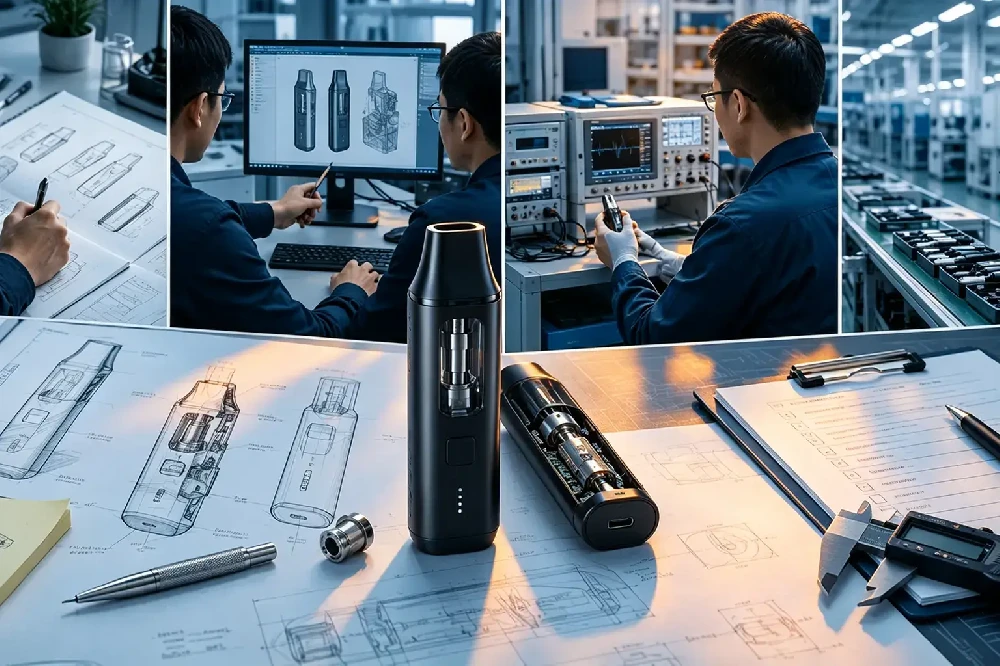
Custom vaporizer development is the process of creating a vaporizer product based on a brand's requirements, market positioning, and product goals. Unlike selecting an existing product, custom development involves multiple stages including concept planning, industrial design, engineering development, prototype validation, testing, and manufacturing preparation.
For brands entering the vaporizer market, working with an experienced OEM/ODM partner can help transform product ideas into reliable, production-ready solutions.
What Is Custom Vaporizer Development?
Custom vaporizer development combines product strategy, design, engineering, and manufacturing expertise to create a device that meets specific brand requirements.
A successful development process requires coordination between mechanical design, electronic systems, heating technology, firmware, testing, and production preparation.
Key Stages of Custom Vaporizer Development
Product Concept and Requirement Definition
The first stage is defining the product concept and business requirements. Brands need to clarify target users, product positioning, expected functions, design direction, and market goals.
Target product category and application;
User experience expectations;
Product differentiation goals;
Customization requirements;
Manufacturing objectives.
A clear product brief helps the development team evaluate technical feasibility and create a practical development roadmap.
Industrial Design and Product Planning
Industrial design defines the product appearance, user interaction, structure concept, and overall market positioning.
During this stage, designers and engineers work together to balance visual requirements with technical feasibility, manufacturing processes, component integration, and product reliability.
Engineering Development and Prototype Validation
Engineering development converts product concepts into functional prototypes through mechanical design, electronic integration, hardware development, and system validation.
Mechanical structure development;
Electronic system integration;
Prototype assembly;
Functional testing;
Design optimization.
Prototype validation helps identify potential issues before moving into mass production.
Testing and Manufacturing Preparation
Before production, the product design needs to be reviewed for manufacturing readiness.
Important considerations include assembly processes, quality control methods, component availability, production testing, and manufacturing consistency.
Mass Production and Quality Control
A reliable manufacturing partner should support the transition from prototype development to stable mass production.
Production management, process control, inspection procedures, and quality verification are essential for maintaining product consistency.
What Should Brands Consider Before Developing a Custom Vaporizer?
Target Market and Product Positioning
Brands should define their target customers and product positioning before development begins. Clear market goals help determine design direction, product features, and development priorities.
Customization Requirements
Customization can range from appearance and branding changes to deeper product development involving structure, electronics, firmware, and system integration.
Development Timeline and Resources
Different product concepts require different levels of engineering effort, prototype validation, and manufacturing preparation. Planning resources early helps create a more efficient development process.
Manufacturing Partner Selection
Choosing the right manufacturing partner is critical. A professional OEM/ODM partner should provide engineering support, production capability, quality management, and effective communication throughout the project.
OEM vs ODM Development Approach
OEM and ODM are two common approaches for custom vaporizer development.
OEM development focuses on manufacturing products based on customer specifications. ODM development provides broader product design and development support, allowing brands to work with manufacturers on product solutions from an earlier stage.
The right approach depends on the brand's product strategy, available resources, desired customization level, and development objectives.
Why Engineering Capability Matters in Vaporizer Development
Custom vaporizer development requires more than manufacturing capacity. Engineering capability helps ensure that product concepts can be converted into reliable and manufacturable solutions.
A strong development partner can support product structure optimization, hardware integration, testing preparation, and manufacturing improvement.
Conclusion
Custom vaporizer development is a complete process that connects product strategy, engineering design, prototype validation, and manufacturing preparation.
For brands looking to create differentiated vaporizer products, selecting an experienced OEM/ODM partner with strong engineering and manufacturing capabilities is essential.
Request OEM Consultation
Looking for a partner for your custom vaporizer development project?
Contact our engineering team to discuss your product concept, development requirements, and OEM/ODM solutions.